Benjamin Whitcomb’s Recordings and Publications
Guide to Practicing the Popper Etudes
Compendium of Chords for the Violin
Compendium of Chords for the Viola
Compendium of Chords for the Cello
Bass Fingerings: Improve Your Left Hand Game
The Advancing Cellist's Handbook: A Guide to Practicing and Playing the Cello
The Advancing Bassist's Handbook: A Guide to Practicing and Playing the Bass
The Advancing Violinist's Handbook: A Guide to Practicing and Playing the Violin
The Advancing Violist’s Handbook: A Guide to Practicing and Playing the Viola
2009 ASTA String Syllabus
Chair of the committee of editors revising the cello portion.
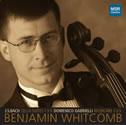
J.S. Bach: Suites 1, 3, 5; D. Gabrielli: Suites 1, 3, 5
(MSR Classics 1177) — Order online / sample »
Other sampler CDs available
—please contact me for more information.
Wisconsin Chamber Orchestra: Momentum

Bone Tomahawk Soundtrack
Reinventing the Ear—Twentieth-Century Theories of Pitch Perception and the Coincidence Theory of Consonance
From Theoria 12 (2005): 69-92
Abstract...
The Coincidence Theory of Consonance: A Re-evaluation Based on Modern Scientific Evidence
(Ph.D. diss., University of Texas at Austin, 1999; UMI 9956952)
Abstract...
Articles
“Tuning Your String Instrument,” The Instrumentalist, Summer 2019.
“So You Think You Have Bad Rhythm,” The Instrumentalist, Spring 2019.
“Playing in High Registers on the Cello,” The Instrumentalist, Fall 2018.
“How to Practice Bach Suite 1 Prelude on Other Instruments,” The Instrumentalist, Summer 2018.
“Understanding and Playing Chords on the Violin, Viola, or Cello,” Arco, July 2018.
“Intonation on a String Instrument,” American String Teacher, May 2017, 20-23.
“How to Practice Max Bruch’s Kol Nidre,” Strings, May 2017, 54-58.
“Memory Banks: 6 Strategies to Help Students Memorize Music More Effectively,” Strings, February 2017, 58-59.
“Cello Ensembles: Repertoire and Rehearsal Techniques,” American String Teacher, November 2014.
“Common Problems of Young Cellists,” American String Teacher, June 2014.
“Creating Your Own Cadenzas,” The Instrumentalist, Fall 2013
“My Turn”, American String Teacher, February 2012, 92.
“Overcoming Performance Anxiety,” American String Teacher, winter 2009.
“Practicing without your Instrument” Stringendo, spring 2009.
“Devising Good Cello Fingerings,” Strings, February 2008.
“Improving Intonation,” American String Teacher, November 2007.